

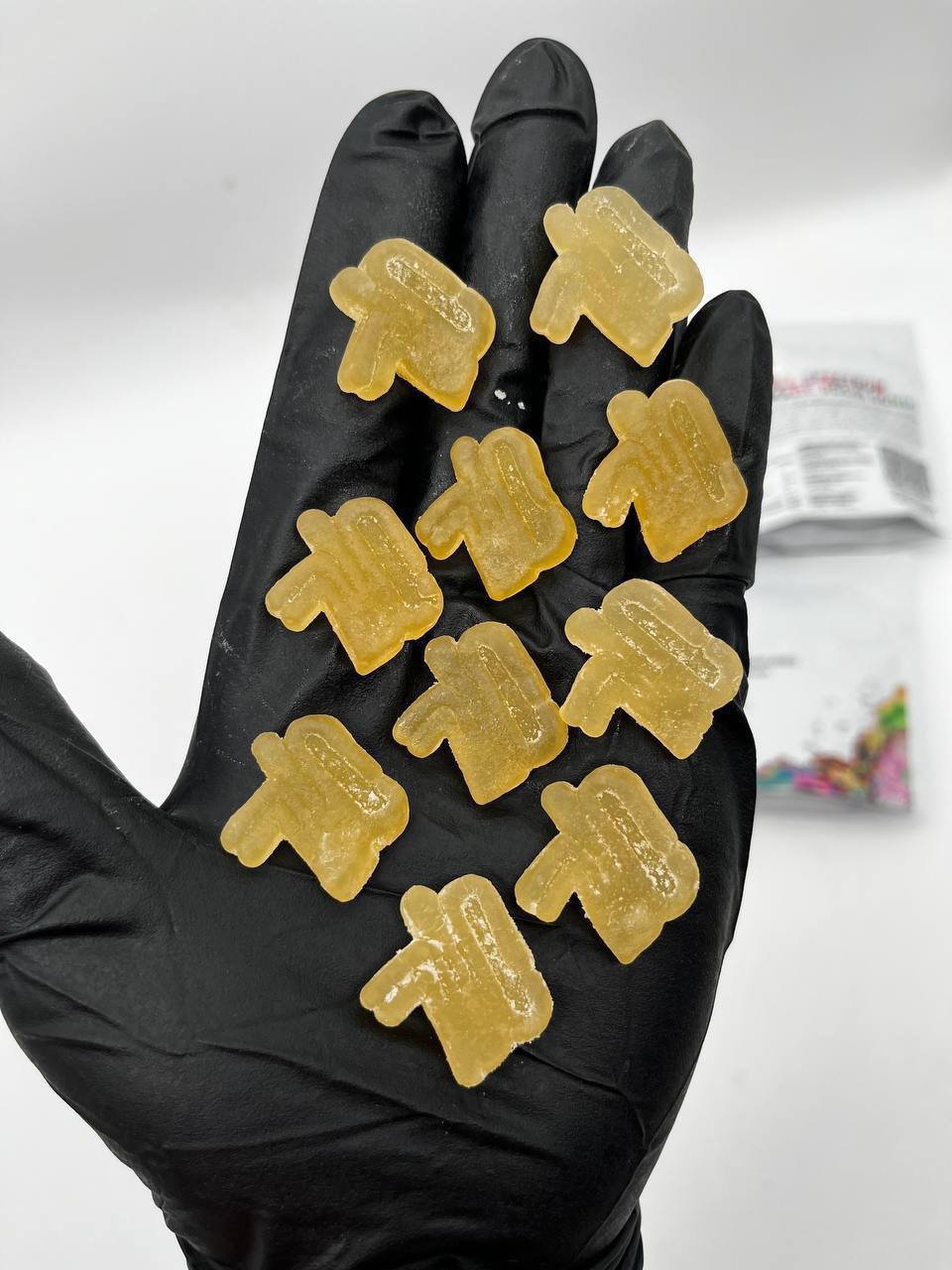
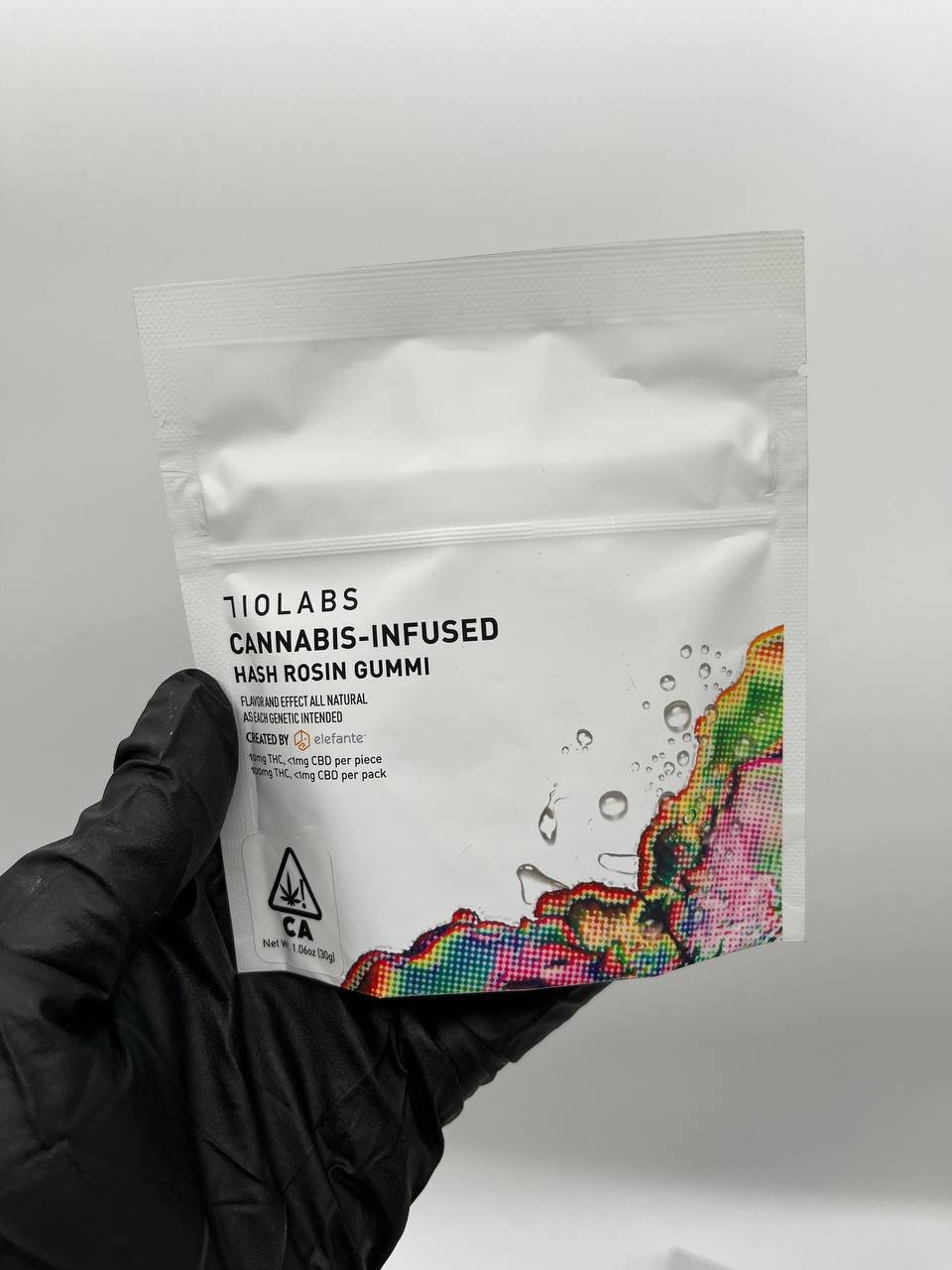
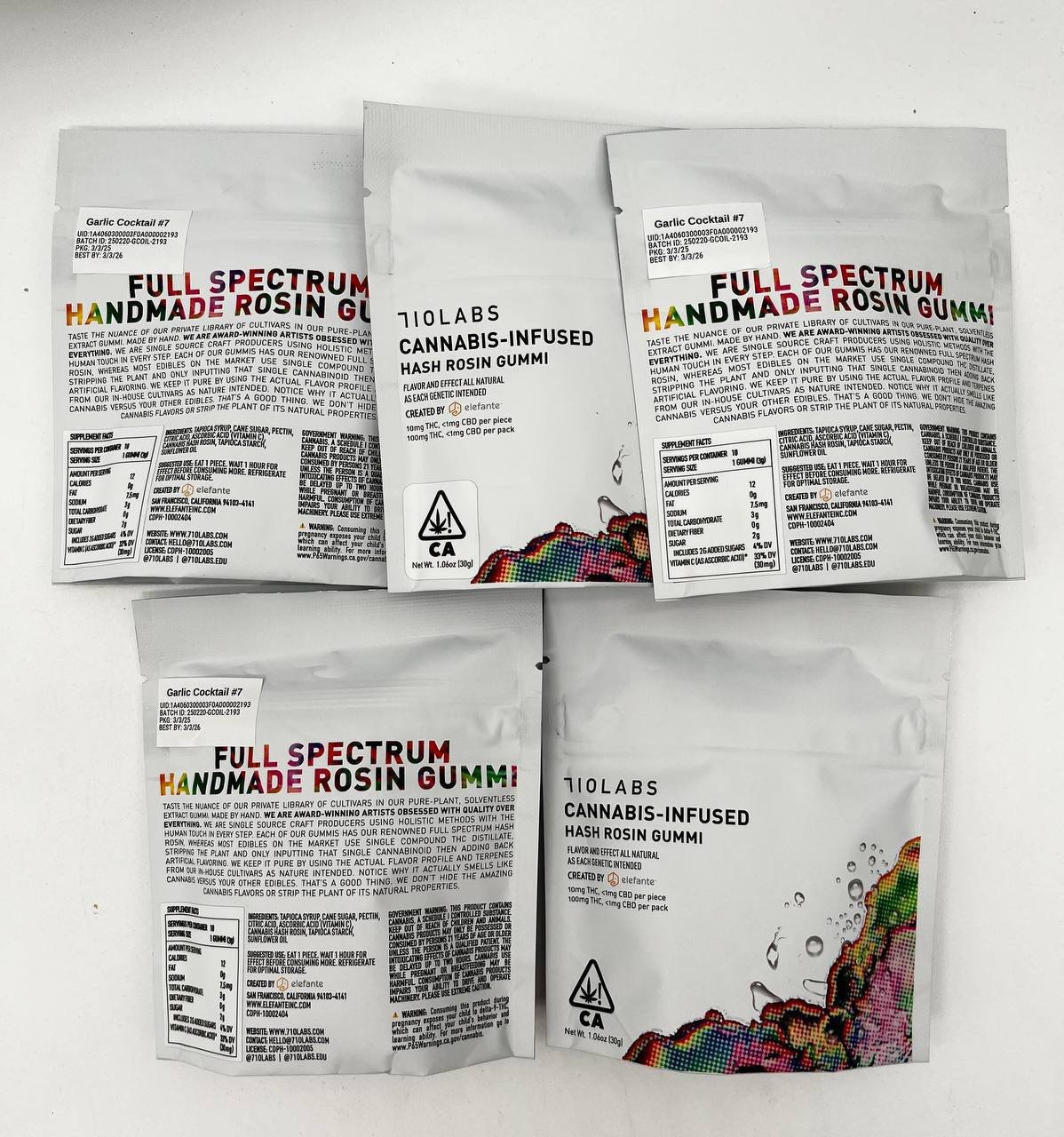
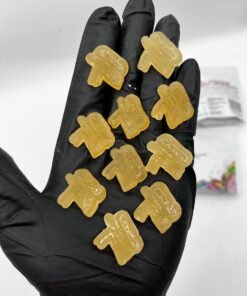
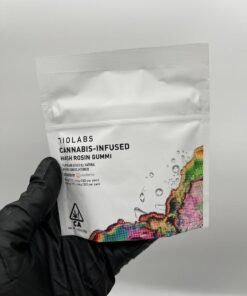
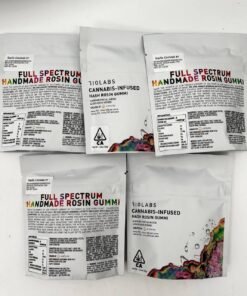
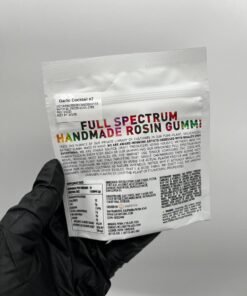
710 Hash Rosin Gummies

Price range: $40.00 through $1,500.00
In regulated botanical markets, edible products are categorized according to their infusion source and manufacturing process. Among concentrate-derived ingredients, hash rosin is recognized as a solventless extract produced through mechanical separation and heat application.
710 Hash Rosin Gummies Informational Edible Product Overview
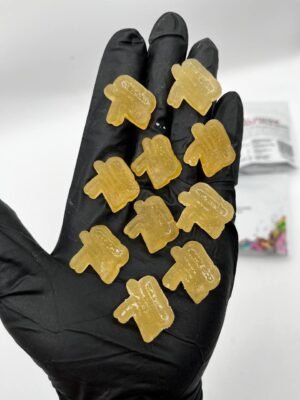
In regulated botanical markets, edible products are categorized according to their infusion source and manufacturing process. Among concentrate-derived ingredients, hash rosin is recognized as a solventless extract produced through mechanical separation and heat application. Therefore, when hash rosin is incorporated into edible formats such as gummies, the final product is classified as a concentrate-infused edible.
“710 Hash Rosin Gummies” functions as a structured product identifier rather than a scientific designation. Instead of serving as promotional language, the name reflects concentrate type and edible format for cataloging and compliance purposes.
This overview explains hash rosin terminology, edible manufacturing standards, laboratory testing practices, packaging requirements, storage conditions, and regulatory frameworks associated with infused gummy products.
Understanding Hash Rosin Extraction
To begin with, hash rosin is produced using a solventless extraction process. Typically, plant material undergoes mechanical separation to collect trichome-rich material. Then, controlled heat and pressure are applied to isolate resinous compounds. As a result, extract material is obtained without the use of chemical solvents.
The general production stages include:
- Collection of trichome-rich material
- Mechanical filtration
- Application of controlled heat and pressure
- Separation of resin from plant matter
- Final refinement
Because solventless extraction avoids chemical solvents, residual solvent testing categories may differ from solvent-based concentrates. Consequently, documentation focuses on purity and contaminant screening.
Edible Infusion and Gummy Manufacturing Process
710 Hash Rosin Gummies products are produced using food-grade manufacturing procedures. First, gelatin or pectin bases are prepared under controlled temperature conditions. Then, sweeteners, flavor components, and colorants are incorporated according to formulation guidelines.
After the base mixture is stabilized, the measured concentrate ingredient is introduced during infusion. Therefore, uniform distribution is achieved through controlled mixing.
The manufacturing sequence typically includes:
- Base mixture preparation
- Controlled heating
- Concentrate infusion
- Mold filling
- Cooling and curing
- Demolding and inspection
Because accurate dosing is essential in regulated markets, batch mixing procedures are carefully documented. As a result, consistency can be maintained across units.
The Significance of “710 Hash Rosin Gummies” in Product Naming
The term “710 Hash Rosin Gummies” is commonly associated with concentrate culture terminology. However, it does not represent a regulatory classification or scientific grading system. Instead, it functions as a branding or cultural reference within product naming conventions.
Regulators rely on laboratory reports and compliance documentation rather than descriptive identifiers. Therefore, batch numbers and production logs remain the primary reference points for oversight.
Laboratory Testing and Quality Assurance
Before distribution approval, infused edible products undergo independent laboratory testing. For this reason, third-party laboratories evaluate safety and compositional metrics.
Testing categories often include:
- Cannabinoid profile verification
- Potency per unit analysis
- Pesticide screening
- Heavy metal testing
- Microbial contamination analysis
- Residual solvent screening (if applicable)
Laboratory reports are linked to batch identifiers. Consequently, regulators can verify compliance efficiently.
Because edible products are ingested, food safety standards also apply. Therefore, sanitation protocols and facility inspections support manufacturing compliance.
Packaging Standards and Protective Measures
Packaging protects gummies from environmental exposure and physical damage. Therefore, manufacturers select materials that preserve freshness and prevent contamination.
Common packaging features include:
- Airtight sealing
- Moisture-resistant materials
- Child-resistant closures (where required)
- Tamper-evident mechanisms
These protective elements reduce degradation risk during storage and transit. As a result, structural integrity and compositional stability are better preserved.
Labeling Requirements and Compliance Information
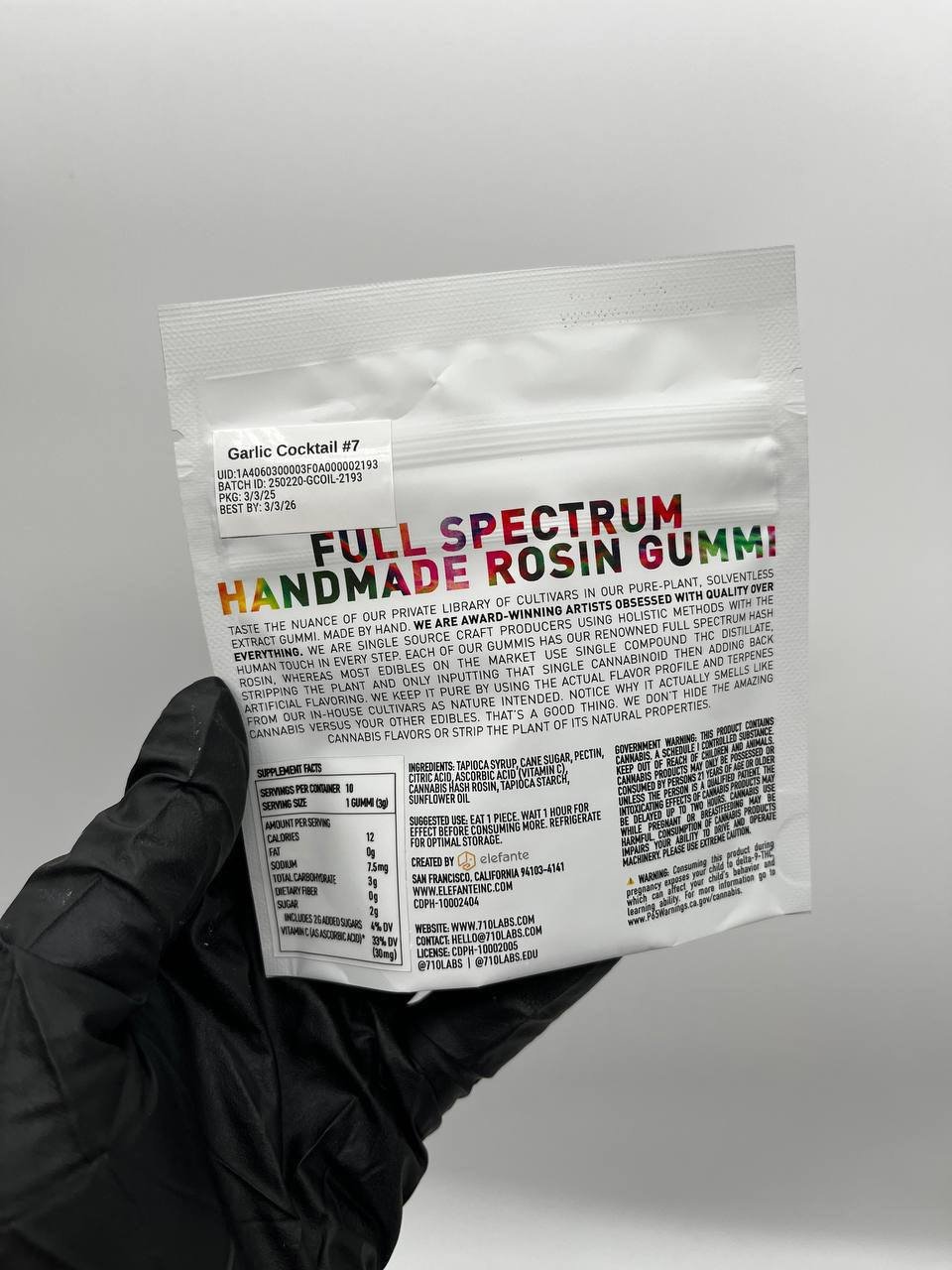
Regulated jurisdictions require specific information to appear clearly on packaging. Therefore, labels typically include:
- Product name (710 Hash Rosin Gummies)
- Net weight or quantity
- Potency per unit and total potency
- Batch or lot number
- Manufacturing or expiration date
- Laboratory testing reference
- Regulatory warnings where mandated
Information placement follows jurisdictional formatting standards. Consequently, compliance inspections can occur without opening sealed packaging.
Storage Guidelines and Shelf Stability
Proper storage conditions help maintain structural stability and compositional integrity. For this reason, gummies should be stored in cool, dry environments away from direct sunlight.
Excessive heat may alter texture consistency. Therefore, climate-controlled warehousing is recommended during distribution.
Additionally, sealed containers should remain closed until authorized handling occurs. As a result, contamination risk is minimized.
Shelf-life duration depends on formulation variables and preservative systems. Consequently, expiration dates are determined based on stability testing data.
Distribution and Supply Chain Oversight
Infused edible products move through regulated supply chains. Therefore, licensed operators manage transportation and documentation requirements.
Tracking systems frequently integrate barcode scanning and digital inventory platforms. Consequently, each package remains connected to its corresponding batch documentation.
Because packaging dimensions are standardized, shipping logistics can be optimized. As a result, transit-related damage risks are reduced.
Regulatory Framework and Restricted Access
In jurisdictions where infused edible products are regulated, distribution is limited to licensed entities. Therefore, compliance documentation accompanies shipments where required.
Age-related restrictions may apply depending on regional legislation. Consequently, accountability remains central to retail processes.
Regulators evaluate laboratory testing reports and manufacturing compliance records rather than branding language. As a result, objective verification guides oversight decisions.
Environmental Considerations and Disposal
Packaging materials may include recyclable plastics or composite containers depending on design. For this reason, disposal practices should align with local recycling guidelines where available.
Manufacturers continue to explore sustainable packaging alternatives. Therefore, environmental impact reduction strategies are gradually integrated into production planning.
Consumers are encouraged to follow regional waste management policies when discarding empty containers. As a result, responsible disposal supports environmental stewardship.
Positioning Within Edible Product Categories
Within the broader edible classification system, hash rosin gummies represent a concentrate-infused subcategory. 710 Hash Rosin Gummies aligns with this classification through solventless extraction sourcing, documented infusion procedures, laboratory verification, and compliance-based packaging standards.
Unlike non-infused confectionery products, concentrate-infused gummies require expanded analytical testing and regulatory oversight. Consequently, production and distribution protocols reflect heightened compliance measures.
Key classification attributes include:
- Solventless hash rosin ingredient source
- Food-grade gummy base formulation
- Measured potency per unit
- Laboratory-verified batch documentation
- Compliance-focused labeling
Because these attributes align with regulatory frameworks, the product can be cataloged efficiently within authorized systems.
Informational Summary
In summary, 710 Hash Rosin Gummies is an infused edible product classification defined by solventless extraction sourcing and food-grade gummy manufacturing standards. Through controlled infusion procedures, laboratory verification, compliance-driven labeling, and regulated distribution channels, the product fits within established oversight systems.
This overview provides a neutral explanation of hash rosin terminology, edible manufacturing processes, packaging requirements, laboratory testing standards, and regulatory considerations. Therefore, it serves as an informational resource rather than promotional content.
| Prices | GARLIC COCKTAIL, 1+, 10+, 20+, 30+, 50+, 100+ |
|---|
1 review for 710 Hash Rosin Gummies
Add a review
Related products
Gummies And Edibles
Gummies And Edibles
Gummies And Edibles

Gummies And Edibles
Gummies And Edibles
Gummies And Edibles
Gummies And Edibles
Gummies And Edibles
Calvin Field –
Finally, a gummy that feels like real medicine. I love that these are vegan, gluten free, and made without any chemical solvents. The effects of the 710 chem batch were incredibly clean no edible anxiety or heavy grogginess the next morning.