

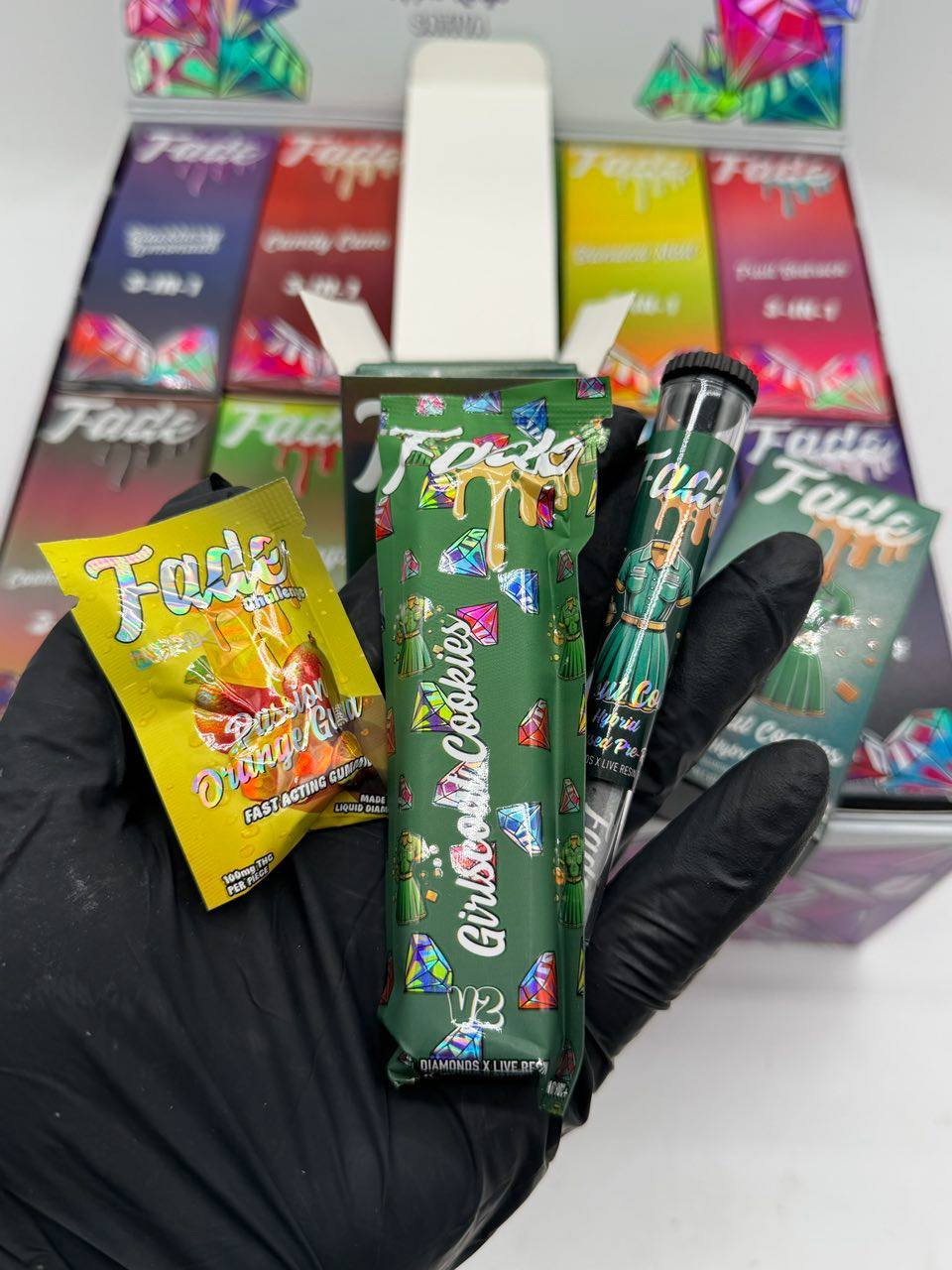

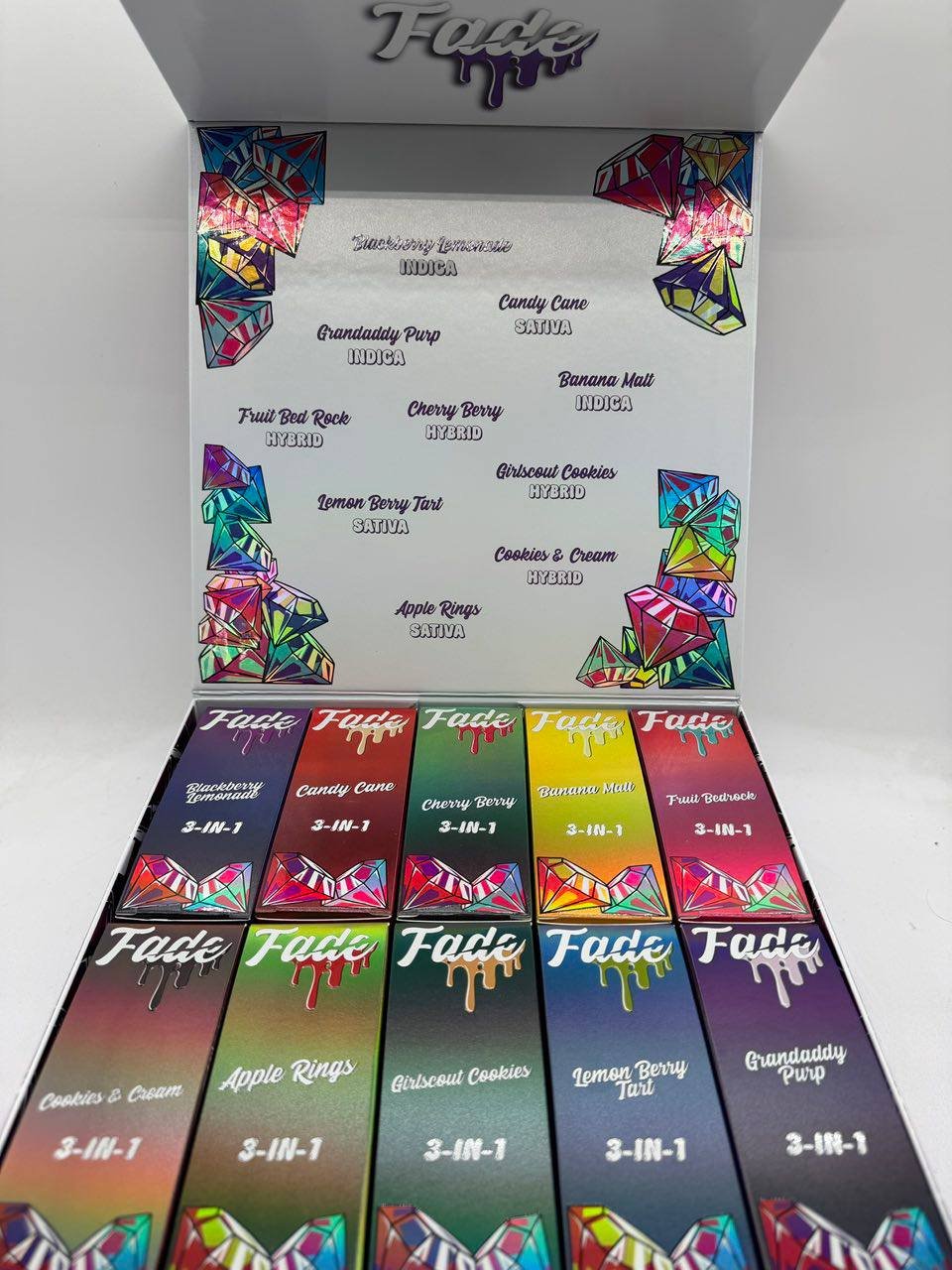
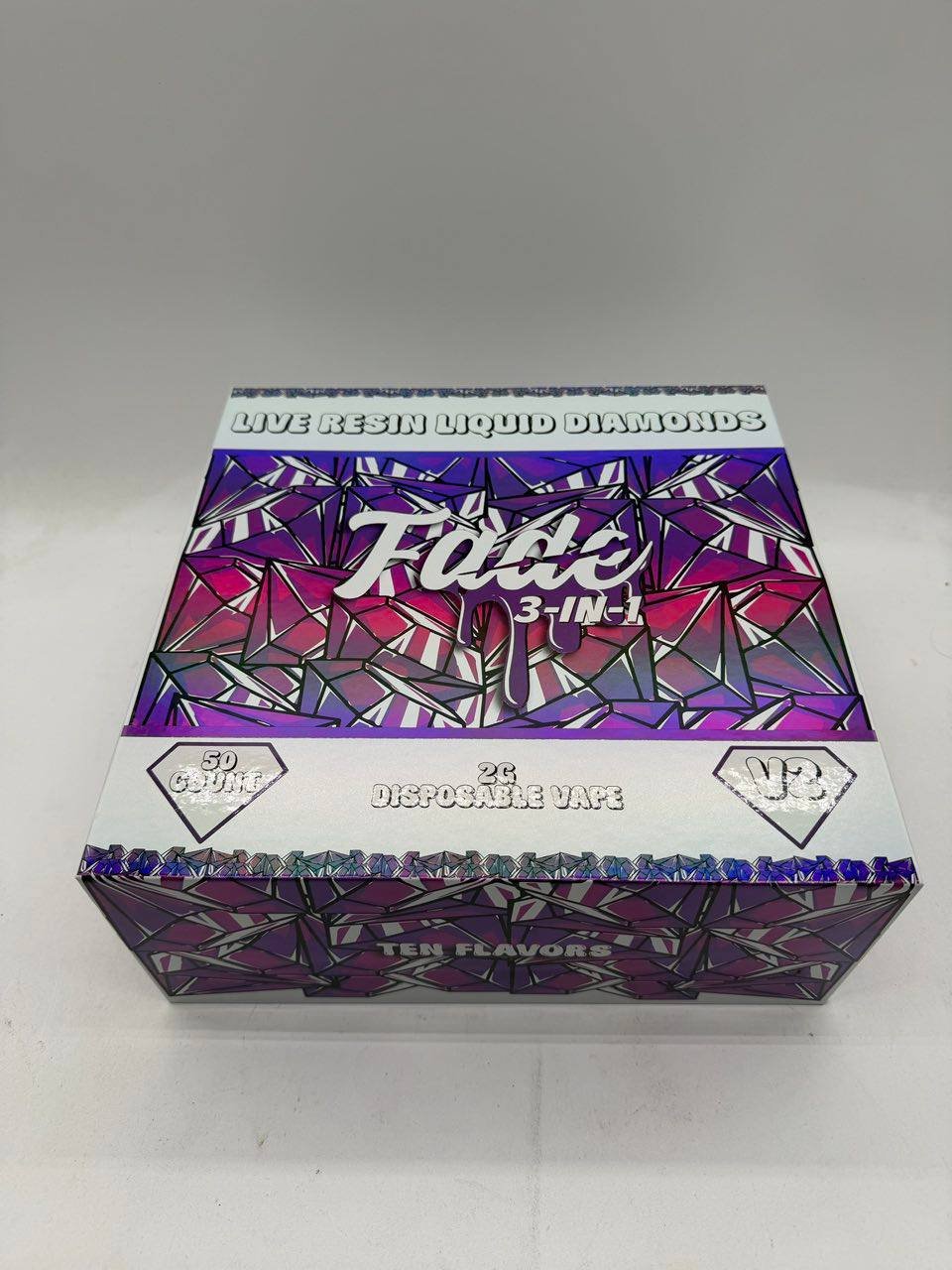


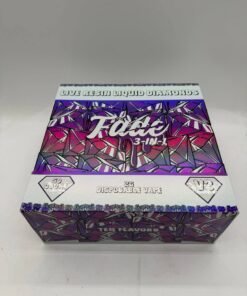
Fade -3-in-1-2G DISPOSABLE


Price range: $25.00 through $1,000.00
In recent years, fade 3-in-1 disposable vapor hardware has evolved beyond single-function formats. Manufacturers now design multi-mode devices that integrate selectable configurations within a compact structure. As a result, devices labeled “3-in-1” typically indicate multiple internal settings rather than multiple separate components.
Fade 3-in-1 2G Disposable Informational Device Overview

In recent years, fade 3-in-1 disposable vapor hardware has evolved beyond single-function formats. Manufacturers now design multi-mode devices that integrate selectable configurations within a compact structure. As a result, devices labeled “3-in-1” typically indicate multiple internal settings rather than multiple separate components.
Fade 3-in-1 2G Disposable fits into this category as a self-contained, capacity-classified device that combines sealed construction with configurable internal operation modes. Instead of focusing on usage experience, this overview explains its structural design, manufacturing standards, labeling framework, and compliance considerations.
Understanding the “3-in-1” Configuration
To begin with, the “fade 3-in-1 disposable” designation generally refers to selectable internal operating modes. These modes are integrated directly into the device’s circuitry. Therefore, no external attachments or modifications are required.
In most cases, three modes may involve:
- Adjustable power levels
- Variable airflow calibration
- Distinct internal heating profiles
Because these features are embedded at the hardware level, transitions between modes are controlled electronically. Consequently, the user interface remains minimal while functionality expands internally.
Capacity Classification: What 2G Signifies
The “fade 3-in- 1 2G disposable ” label serves as a capacity classification marker. In manufacturing and inventory systems, capacity labels standardize packaging dimensions, internal calibration, and shipping documentation.
Moreover, standardized capacity ensures consistent internal spacing for battery size and component placement. As a result, quality control procedures become more predictable across production batches.
Capacity classification also supports regulatory documentation. Therefore, distributors can track inventory categories with greater precision.
Exterior Construction and Materials
From a structural perspective, Fade 3-in-1 2G Disposable features a compact, ergonomic shell. Manufacturers typically use lightweight yet impact-resistant materials to balance durability with portability.
Additionally, surface finishes are selected to resist scratches and fingerprints. Because of this design choice, the device maintains a clean appearance during storage and transport.
The housing is sealed during final assembly. As a result, internal components remain protected from dust and moisture exposure under normal handling conditions.
Internal Component Layout
Inside the fade 3-in- 1 2g disposable device, components are arranged in a vertically optimized configuration. This layout maximizes space efficiency while preserving airflow pathways.
The internal system typically includes:
- Integrated battery module
- Sealed reservoir compartment
- Heating element assembly
- Mode-selection circuitry
Because the device is factory-assembled, alignment checks occur before final sealing. Consequently, structural inconsistencies can be corrected prior to distribution.
Power Management and Battery Integration
Battery systems in fade 3-in 1 disposable devices are non-removable and pre-calibrated. In this format, the battery is matched to the device’s capacity and operational settings.
Furthermore, internal circuitry regulates power delivery according to selected modes. Therefore, output consistency is maintained across different configurations.
Manufacturers test battery performance under standardized conditions. As a result, units that fail to meet thresholds are removed before packaging.
Fade -3-in-1-2G DISPOSABLE
One defining characteristic of the Fade 3-in-1 2G Disposable is its simplified mode-selection mechanism. Instead of requiring external adjustments, the device integrates a minimal interface.
Typically, the interface may include:
- A discrete button
- An LED indicator
- Automatic draw activation
Because the interface is streamlined, accidental adjustments are minimized. Consequently, operational reliability is preserved throughout handling.
Manufacturing Standards and Quality Assurance
Production follows repeatable assembly protocols. Each stage of the process is monitored for consistency.
Quality assurance measures often include:
- Exterior inspection
- Seal integrity verification
- Electrical continuity testing
- Packaging alignment review
These steps are performed systematically. Therefore, defective units can be identified before distribution.
Batch tracking systems are also implemented. As a result, inventory can be traced efficiently if review or recall procedures become necessary.
Packaging and Information Design
Packaging serves both protective and informational purposes. Boxes are sized according to capacity classification, which reduces internal movement during transit.
Additionally, labeling includes:
- Product identifier
- Capacity designation
- Batch number
- Regulatory notices
Information placement follows standardized formatting guidelines. Consequently, compliance checks can be completed without opening sealed packaging.
Storage Guidelines and Environmental Stability
Proper storage conditions help maintain device integrity. For this reason, manufacturers recommend storing fade flavor devices in cool, dry environments away from direct sunlight.
Extreme heat may affect battery stability. Therefore, climate-controlled storage is preferred during warehousing.
Humidity exposure should also be minimized. As a result, packaging seals remain intact and labeling remains legible over time.
Logistics and Distribution Efficiency
Disposable devices are designed with logistics efficiency in mind. Uniform dimensions allow cartons to be stacked securely.
Because of consistent sizing:
- Shipping damage is reduced
- Inventory scanning becomes faster
- Warehouse organization improves
Additionally, barcode placement supports automated tracking systems. Consequently, distribution timelines are optimized.
Compliance and Age-Restricted Handling
In regulated markets, distribution is limited to authorized retailers. Therefore, compliance documentation accompanies shipments when required.
Age-restricted handling policies are enforced at the retail level. As a result, accountability is maintained throughout the supply chain.
Packaging includes mandated notices where applicable. Consequently, retailers can meet jurisdictional standards without altering original labeling.
Environmental Considerations
Disposable electronic devices contain batteries and circuitry. For this reason, responsible disposal practices are encouraged.
Many regions provide electronic waste collection programs. Therefore, devices should be handled according to local recycling guidelines.
Additionally, manufacturers increasingly explore recyclable packaging materials. As a result, overall environmental impact can be reduced over time.
Structural Durability and Handling Integrity
Fade 3-in-1 2G Disposable is engineered for structural resilience during transport. Internal components are secured to prevent shifting.
Furthermore, reinforced seams help maintain housing stability. Because of these design choices, vibration during shipping is less likely to affect internal alignment.
However, excessive force or improper storage may still compromise integrity. Therefore, careful handling is recommended at every stage of distribution.
Understanding the “3-in-1” Configuration
To begin with, the “fade live resin disposable 3-in-1” designation generally refers to selectable internal operating modes. These modes are integrated directly into the device’s circuitry. Therefore, no external attachments or modifications are required.
In most cases, three modes may involve:
- Adjustable power levels
- Variable airflow calibration
- Distinct internal heating profiles
Because these features are embedded at the hardware level, transitions between modes are controlled electronically. Consequently, the user interface remains minimal while functionality expands internally.
Capacity Classification: What 2G Signifies
The “fade 3-in-1 disposable 2G” label serves as a capacity classification marker. In manufacturing and inventory systems, capacity labels standardize packaging dimensions, internal calibration, and shipping documentation.
Moreover, standardized capacity ensures consistent internal spacing for battery size and component placement. As a result, quality control procedures become more predictable across production batches.
Capacity classification also supports regulatory documentation. Therefore, distributors can track inventory categories with greater precision.
Exterior Construction and Materials
From a structural perspective, Fade 3-in-1 2G Disposable features a compact, ergonomic shell. Manufacturers typically use lightweight yet impact-resistant materials to balance durability with portability.
Additionally, surface finishes are selected to resist scratches and fingerprints. Because of this design choice, the device maintains a clean appearance during storage and transport.
The housing is sealed during final assembly. As a result, internal components remain protected from dust and moisture exposure under normal handling conditions.
Internal Component Layout
Inside the fade live resin , components are arranged in a vertically optimized configuration. This layout maximizes space efficiency while preserving airflow pathways.
The internal system typically includes:
- Integrated battery module
- Sealed reservoir compartment
- Heating element assembly
- Mode-selection circuitry
Because the device is factory-assembled, alignment checks occur before final sealing. Consequently, structural inconsistencies can be corrected prior to distribution.
Power Management and Battery Integration
Battery systems in Fade -3-in- 1-2G DISPOSABLE devices are non-removable and pre-calibrated. In this format, the battery is matched to the device’s capacity and operational settings.
Furthermore, internal circuitry regulates power delivery according to selected modes. Therefore, output consistency is maintained across different configurations.
Manufacturers test battery performance under standardized conditions. As a result, units that fail to meet thresholds are removed before packaging.
Mode Selection Interface
One defining characteristic of the Fade 3-in-1 2G Disposable is its simplified mode-selection mechanism. Instead of requiring external adjustments, the device integrates a minimal interface.
Typically, the interface may include:
- A discrete button
- An LED indicator
- Automatic draw activation
Because the interface is streamlined, accidental adjustments are minimized. Consequently, operational reliability is preserved throughout handling.
Manufacturing Standards and Quality Assurance
Production follows repeatable assembly protocols. Each stage of the process is monitored for consistency.
Quality assurance measures often include:
- Exterior inspection
- Seal integrity verification
- Electrical continuity testing
- Packaging alignment review
These steps are performed systematically. Therefore, defective units can be identified before distribution.
Batch tracking systems are also implemented. As a result, inventory can be traced efficiently if review or recall procedures become necessary.
Packaging and Information Design
Packaging serves both protective and informational purposes. Boxes are sized according to capacity classification, which reduces internal movement during transit.
Additionally, labeling includes:
- Product identifier
- Capacity designation
- Batch number
- Regulatory notices
Information placement follows standardized formatting guidelines. Consequently, compliance checks can be completed without opening sealed packaging.
Storage Guidelines and Environmental Stability
Proper storage conditions help maintain device integrity. For this reason, manufacturers recommend storing devices in cool, dry environments away from direct sunlight.
Extreme heat may affect battery stability. Therefore, climate-controlled storage is preferred during warehousing.
Humidity exposure should also be minimized. As a result, packaging seals remain intact and labeling remains legible over time.
Logistics and Distribution Efficiency
Fade 3-in-1 2g disposable devices are designed with logistics efficiency in mind. Uniform dimensions allow cartons to be stacked securely.
Because of consistent sizing:
- Shipping damage is reduced
- Inventory scanning becomes faster
- Warehouse organization improves
Additionally, barcode placement supports automated tracking systems. Consequently, distribution timelines are optimized.
Compliance and Age-Restricted Handling
In regulated markets, distribution is limited to authorized retailers. Therefore, compliance documentation accompanies shipments when required.
Age-restricted handling policies are enforced at the retail level. As a result, accountability is maintained throughout the supply chain.
Packaging includes mandated notices where applicable. Consequently, retailers can meet jurisdictional standards without altering original labeling.
Environmental Considerations
Fade 3-in-1 2g Disposable electronic devices contain batteries and circuitry. For this reason, responsible disposal practices are encouraged.
Many regions provide electronic waste collection programs. Therefore, devices should be handled according to local recycling guidelines.
Additionally, manufacturers increasingly explore recyclable packaging materials. As a result, overall environmental impact can be reduced over time.
Structural Durability and Handling Integrity
Fade 3-in-1 2G Disposable is engineered for structural resilience during transport. Internal components are secured to prevent shifting.
Furthermore, reinforced seams help maintain housing stability. Because of these design choices, vibration during shipping is less likely to affect internal alignment.
However, excessive force or improper storage may still compromise integrity. Therefore, careful handling is recommended at every stage of distribution.
Standardization Within the Disposable Category
Within the broader disposable hardware market, multi-mode devices represent a technical evolution rather than a separate category. Fade 3-in-1 2G Disposable aligns with this trend by integrating selectable configurations into a sealed format.
Unlike modular systems, this device does not require replacement parts. Consequently, logistical complexity is reduced.
Its defining characteristics include:
- Sealed construction
- Integrated power management
- Capacity classification
- Mode-selection functionality
Because these features are standardized, the device can be cataloged efficiently within inventory systems.
Summary and Informational Positioning
In summary, Fade 3-in-1 2G is a capacity-classified, sealed electronic device featuring integrated multi-mode functionality. Through controlled manufacturing, structured quality assurance, and compliance-ready packaging, the device fits into modern distribution frameworks.
| Prices | Blackberry Lemonade, Candy cane, Cherry berry, Banana malt, Fruit bedrock, Girls scout cookies, Apple rings, Granddady purp, 5 pack, 10 pack, 25 pack, 50 pack, 100 pack master box |
|---|
Be the first to review “Fade -3-in-1-2G DISPOSABLE”
Related products


Disposable Vape And Cartridge

Disposable Vape And Cartridge


Disposable Vape And Cartridge


Disposable Vape And Cartridge


Disposable Vape And Cartridge


Disposable Vape And Cartridge

Disposable Vape And Cartridge


Disposable Vape And Cartridge
Reviews
There are no reviews yet.